




Construction Loans: How Do New Home Build Loans Work?

A construction loan is designed to finance a new home build in phases—so funds can be released as work is completed. Many construction setups include a construction phase followed by permanent financing once the home is finished, and disclosures often reflect interest-only payments during the construction phase.

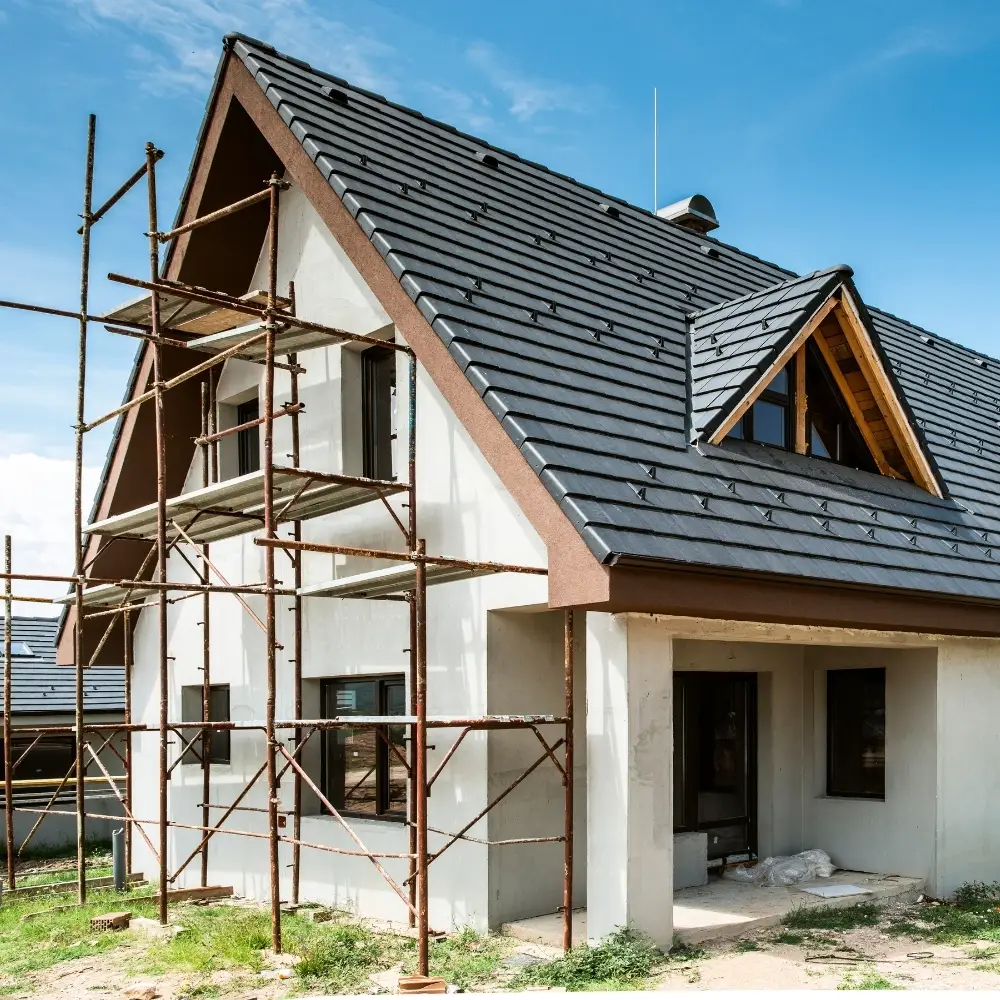
A modern house under construction, ideal for first-time home buyers with available home loans and a steep, dark-tiled roof.

Quick Answer: What to Expect With a Construction Loan

Construction financing is different from a typical purchase loan because money is not delivered all at once. Instead, funds are managed and released over time, and the payment structure during the build can be different than a standard mortgage (often shown as interest-only payments during the construction phase).

Two people discuss paperwork, calculator, and house model—ideal scene for first-time home buyers or home loans advice.

Construction Loans in Northern Kentucky and Greater Cincinnati

If you’re building in Northern Kentucky or Greater Cincinnati, the best construction experience starts with clarity: a realistic budget, the right builder paperwork, a clean borrower file, and a loan structure that matches your project. Brad Hamblen Home Loans helps you map the process early so you’re not guessing once you’re under contract or mid-build.

A model house with blueprints, calculator, and tools—ideal for mortgage refinance or purchase home loans.

How Construction Loans Work

Construction financing is typically structured like a project plan. The goal is to keep the build moving while protecting the timeline and documentation standards needed for approval.

Draws and build milestones

Funds are commonly released in stages (often called draws) as work is completed. That keeps disbursements tied to progress, rather than paying everything at once.

Why documentation matters more with construction

Because the home is being built, underwriting typically needs more build-related documentation than a standard purchase, so the file stays stable as the project progresses.

Two people sign a contract at a desk with keys and documents—ideal for first-time home buyers or mortgage refinance.

One-Closing vs Two-Closing Construction-to-Permanent Financing

Construction-to-permanent financing is commonly structured as either a single-closing or a two-closing transaction.

One-closing (construction-to-permanent)

Fannie Mae notes that in a single-closing transaction, construction and permanent financing can be closed at the same time, and the lender is responsible for managing disbursement of proceeds to the builder/contractor or authorized suppliers.

Two-closing

Fannie Mae’s job aid explains that two-closing construction-to-permanent transactions use two separate closings with two sets of closing documents, with the first closing for interim construction financing.

Close-up of a mortgage application form with a pen, metal key, and home loans details for first-time home buyers.

What to Prepare Before You Apply

A construction loan moves faster when your build plan is clear and your checklist is clean.

Build plan basics that help approval

  • Builder/contractor information and scope of work

  • Estimated timeline and milestone schedule

  • Budget + contingency planning

  • Your income/asset documentation and affordability strategy

What borrowers ask most about “payments during construction”

For multiple-advance construction loans, federal disclosure guidance addresses how interest is estimated and how interest payments (including interest-only payments during the construction period) are disclosed in the repayment schedule.

Your Construction Loan Process

You deserve a process that feels steady—especially when you’re coordinating a build schedule, deadlines, and decisions.

A person points to paperwork by a model house, indicating a real estate transaction with a mortgage lender.

Step 1 — Strategy Call + Build Snapshot

We confirm your goals, timeline, and whether a one-closing or two-closing structure fits best.

A calculator, house model, and clipboard represent home loans and mortgage refinance paperwork on a desk.

Step 2 — Pre-Approval + Clean Documentation Checklist

We build a clean file with the documentation underwriting needs, plus the builder and project details that support a smooth review.

Two people review financial documents, a wooden house, and calculator—discussing purchase home loans at the desk.

Step 3 — Milestones + Draw Coordination

As the build progresses, funds are typically tied to milestones (draw stages) with documentation that supports each step.

A hand holds a house-shaped keychain and key, perfect for first-time home buyers seeking purchase home loans.

Step 4 — Completion + Transition to Long-Term Financing

Once the build is complete, your financing continues based on the structure selected from the beginning (one-closing transition or a two-closing permanent loan).

Construction Loan Guides and Comparisons

Want to learn the basics now and go deeper over time? These are the five resources to publish first so buyers can compare options clearly:

Stacks of coins and a small house model with an upward arrow, representing growth in home loans for first-time home buyers.

Helpful Tools & Homebuyer Resources

Mortgage Calculators

Run quick scenarios to understand how price, down payment, and term impact the payment.

First-Time Homebuyer Guide

Get a step-by-step overview to reduce stress and avoid surprises.

Home Loan Readiness Checklist

A Comprehensive Guide to Ensure You Are Fully Prepared for Securing Your Home Loan Approval

Explore All Loan Options

Discover and thoroughly explore all of our diverse loan options available to you.

Construction Loan FAQs

Your Construction loan questions answered clearly and simply.

They typically fund a build in stages tied to progress milestones rather than delivering all funds at once.

Construction-to-permanent financing can be structured with one closing or two separate closings.

Many construction loans require interest payments during the construction period, and federal disclosure guidance addresses how those interest payments and timing are disclosed for multiple-advance construction loans.

Timelines vary based on builder readiness, documentation, underwriting, inspections, and the construction schedule.

Often yes, depending on ownership, title, program structure, and how the build is documented.

Budget accuracy matters. Cost changes may require scope updates, additional funds, or restructure depending on guidelines.

Schedule a call to map your build plan, timeline, and best structure early so you don’t lose time later.

Sometimes, depending on how the project is structured and the loan program used.

Yes, many borrowers explore construction financing for custom builds, with builder documentation and a clear scope of work.

Get pre-approved so we can build a clear checklist, confirm affordability, and set a realistic timeline.

Service Area and Licensing

Office: 6900 Houston Road Unit 25, Florence, KY 41042
Phone: (859) 466-7230

Brad Hamblen (NMLS #52831) is licensed as a Mortgage Loan Originator in:

Florida, Georgia, Indiana, Kentucky, North Carolina, Ohio, South Carolina, Tennessee, Texas, Virginia

Ready to Choose the Right Construction Loan Structure?

Get a simple checklist, a realistic timeline, and clear next steps—so your build stays organized from start to close.

Join Our Newsletter

Get our latest resource guides, informative mortgage news, and valuable insights to help you navigate the complexities of the home buying process sent right to your inbox.